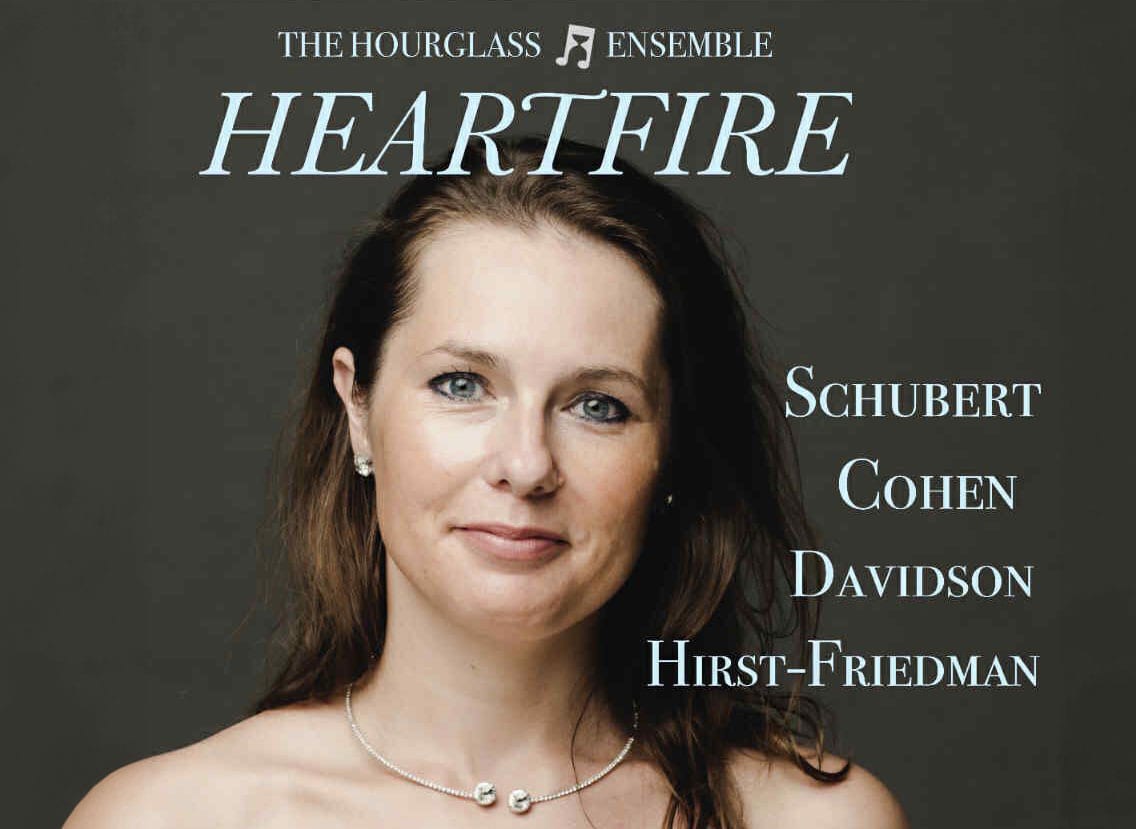
Hourglass Ensemble | HeartFIRE
25 October 2025, Utzon Room, Sydney Opera House, NSW
Program
Robert Davidson: Three Bird Riffs
Franz Schubert: Shepherd On The Rock
Ollie Muller: Petrie Creek Road
Robert Davidson: Leaf
Gilad Cohen (Israel): Trio for a Spry Clarinet, Weeping Cello, and Ruminating harp
Amanda Harberg (USA): Court Dances
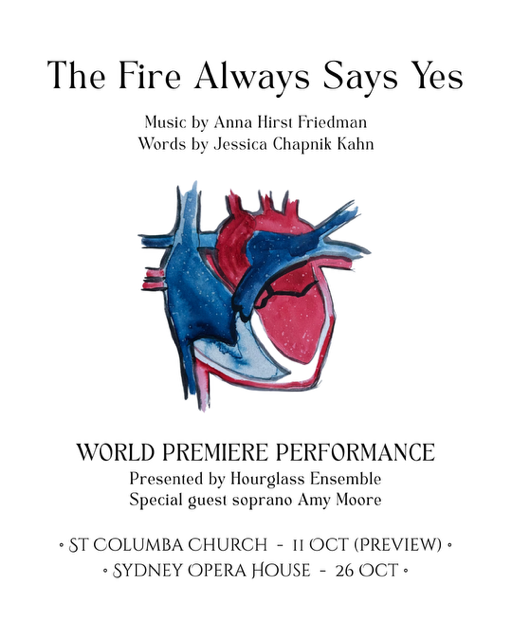
Anna Hirst Friedman (with poetry by Jessy Chapnik Kahn): The Fire Always Says Yes
Artists
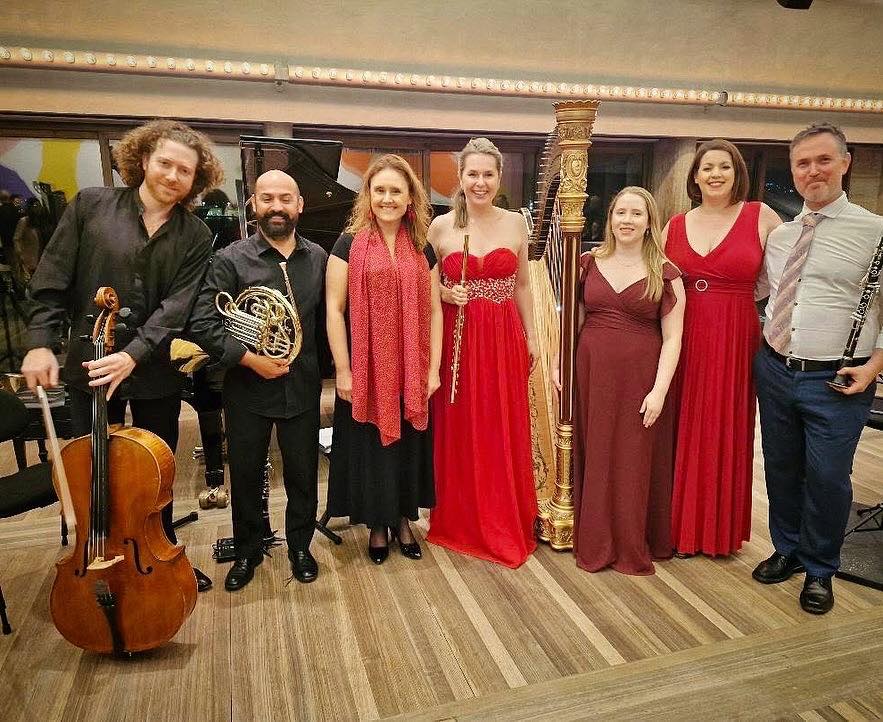
Amy Moore: Soprano
Andrew Kennedy: Clarinets
Anna Rutkowska-Schock: Piano
Ewa Kowalski: Flutes
Jack Ward: Cello
Kate Moloney: Harp
Rafael Salgado: French Horn
Schubert notwithstanding, this concert was all contemporary music with no less than three world premieres by Australian Composers. An impressive lineup.
Shepherd On The Rock is Schubert’s masterpiece for voice, piano and clarinet and it is always wonderful to hear. In the context of this program, however, it was the odd work out. Amy Moore produced a legato line and a warm vibrant tone in the middle and upper registers. This phrasing must be echoed by the clarinet, which initially fell rather short of the soprano’s colour, lyrical phrase shape and articulation. More joint rehearsals may have helped. Fortunately things improved in this regard as the performance progressed. Anna Rutkowska-Schock supported with musical sensitivity on the piano.
The world premiere of Ollie Muller’s Petrie Creek Road for flute, clarinet and piano musically portrayed an 80km/h road trip along a Queensland country road, as the composer said, “trying not to hit a cane toad”. Rutkowska-Schock beautifully evoked the intense natural beauty of the passing countryside as flute and clarinet cruised often in relaxed thirds and sixths. One could envisage one hand on the wheel with an elbow out the window.
Robert Davidson described his Leaf as being influenced by the minimalism of his teacher Terry Riley, the music of the Tibetan folk singer Tenzin Choegyal and the African stringed instrument, the Kora. When stressed or depressed Davidson would concentrate on a single leaf to calm himself; then slowly expand the view to the whole tree and then eventually the forest in awe and wonder. Again a world premiere performance commissioned by Hourglass, this work is scored for flute, harp and French horn, the addition of which worked surprisingly well. Rafael Salgado’s tone and volume was expertly controlled to match the gentler instruments. The harp and flute played by Moloney and Kowalski were also even toned and rich; the musical elements were expertly handled. The climax of the work in the harp’s glissando passage was thrilling.
The most virtuosic work was the third movement from the Court Dances for flute and piano by American composer Amanda Harberg. Rutkowska-Schock and Kowalski put in a fiery and exciting performance of this difficult piece.
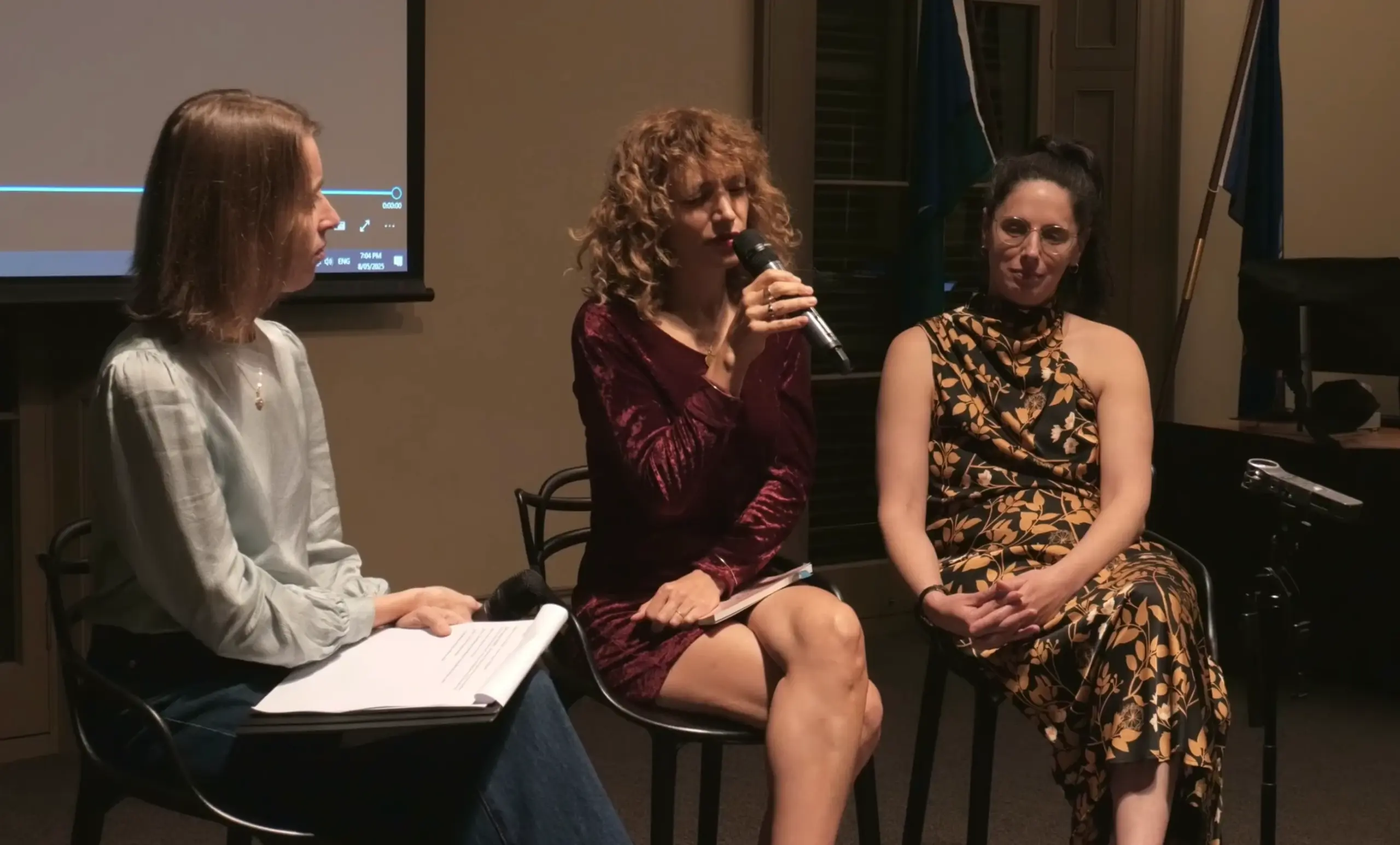
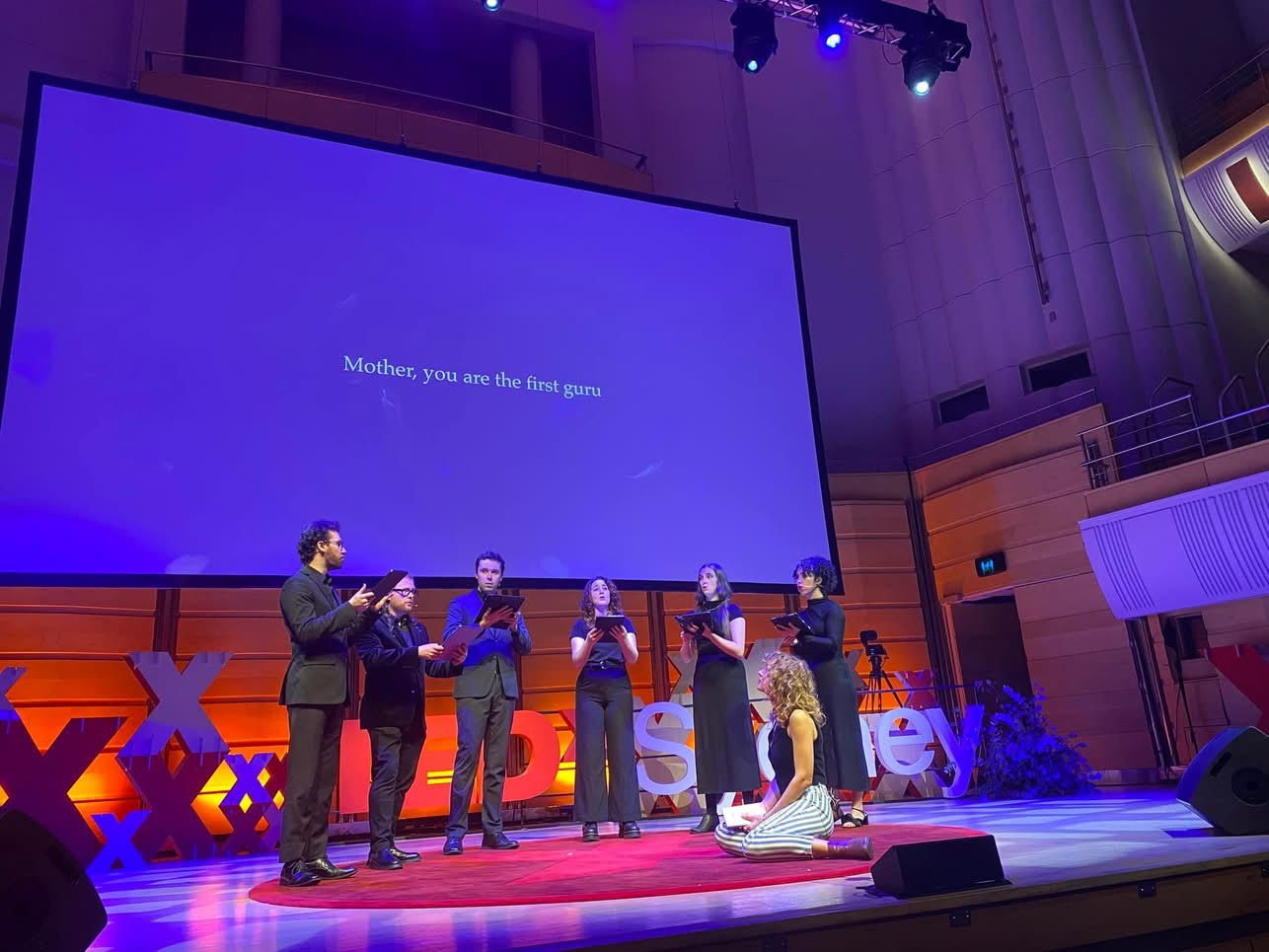
The final world premiere on the program, The Fire Always Says Yes, involved the whole ensemble. The concept of fire as the transformative element was applied to the human heart, which is the centre of the life force and the locus of transformation. The composer Anna Hirst Friedman spoke at length and the poet Jessy Chapnik Kahn briefly, giving the audience insight into the creation and background of this song cycle. Waves of life seemed to emanate from the first song whose only words were “The fire always says Yes.” The second song, “I came to the fire” started with a romantic cello line gorgeously played by Jack Ward. Here tubular bells added a sense of cataclysm; fire is purgative but it does not discriminate. “How is your fire” deals with the death of the poet’s father, when the fire has gone out. In the aftermath “Real Heats” carries a pulsing heartbeat of the poet, with the flute line rising and falling like consuming flames. It uses references to Gethsemane both to refer to prayer, but also to the point at which the whole narrative of life is irrevocably changed. “When the fire goes out”, the final song, describes the total destruction in the aftermath of the fire, and yes, there may be other things that can arise from the darkness, but we don’t yet know what. This is a wonderful work and the ensemble imbued it with the fire’s inescapable force. An immersive and excellent performance.
I have left the first until last because Robert Davidson’s Three Bird Riffs absolutely astounded me. The three movements were centred around three prerecorded birdsong fragments each with their own light percussion track to hold the music together: kookaburras with finger cymbals, a raven with a brushed snare drum and a Magpie with clapsticks. The lineup of flute, bass clarinet and piano, added jazzy ostinatos and mimicked or doubled the birds in time with the percussion. The musicians skilfully brought to life music full of humour and joy. Despite the very European instruments in the ensemble, the work was quintessentially Australian. How clever and what a delight!
Hourglass Ensemble: three world premieres by Australian Composers – impressive!